Before the Congregation
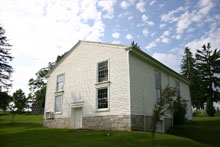
Old St. John Lutheran Church was founded in the late 18th century by German and Scots-Irish settlers who arrived in the Great Valley of Virginia along a route that had been traveled for thousands of years before them. This page acknowledges the peoples who were here first.
The Land Before the Church
Human presence in the New River Valley is archaeologically documented to the Paleo-Indian period — at least 10,000 years before European settlement. For those millennia, the valley was home to, and traveled through by, Indigenous peoples.
The route now followed by Route 11 and Interstate 81 through Wytheville was part of the Great Indian Warpath, a primary north-south corridor used for trade and movement by many peoples — including the Haudenosaunee to the north and the Cherokee and Catawba to the south. Wytheville sits at a geographic junction that made this ground significant long before any European name was placed on it.
Displacement
The Siouan-speaking peoples who had inhabited and used this region — groups related to the Tutelo and Saponi — were largely displaced by the 1740s, through the combined pressures of Iroquois expansion and European disease. By the time St. John’s was established, in the 1780s, those peoples had been gone from this area for a generation.
A Note on What This Page Does Not Say
The history of Indigenous peoples in this region is not fully known to us, and this church is not the right voice for it. This page does not attempt to speak for those peoples or reconstruct their lives in detail. It names the fact of their presence and their displacement, and directs those seeking fuller history to sources closer to that knowledge.